7 Elements of an Effective Compliance Program: Common Mistakes and How to Avoid Them
Compliance sounds straightforward when explained in theory. In real life, it rarely feels that way. Compliance officers, healthcare administrators, and financial teams often work under pressure. Rules change. Risks grow. Expectations increase. Many teams try their best but still feel unsure whether their compliance program is truly strong enough.
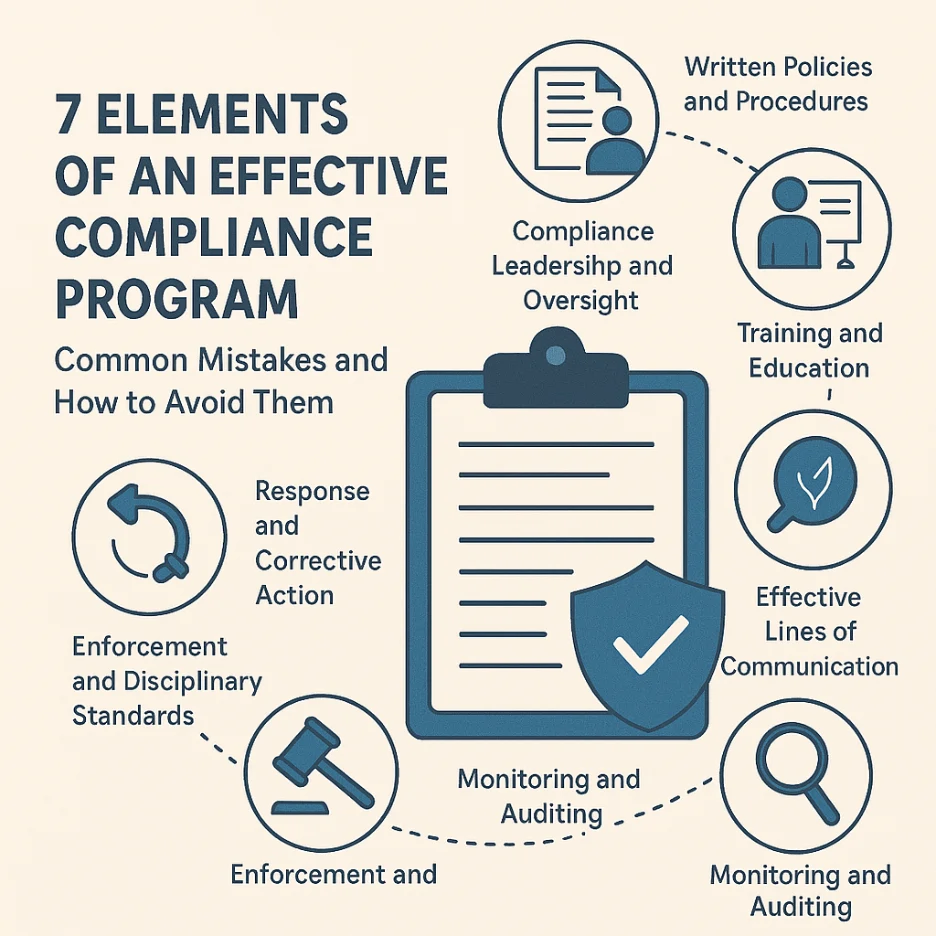
The good news is that the most effective compliance frameworks follow the same structure. Regulators and industry experts often refer to the seven core elements. These are not just guidelines. They are practical steps that help organizations stay organized, reduce risk, and build trust.
This article explains the elements of an effective compliance program, common mistakes people make, and simple ways to avoid them.
Why the Elements Matter
A good compliance program protects more than legal standing. It protects people, reputation, and daily operations. It creates structure in environments where regulations can feel complex and constantly changing. When organizations understand the elements of an effective compliance program and apply them consistently, compliance stops feeling like a burden and starts becoming part of everyday work.
Strong compliance also builds trust. Employees feel safer when expectations are clear. Leadership gains confidence because risks are visible rather than hidden. External partners, regulators, and stakeholders see that the organization takes responsibility seriously. Over time, this creates stability and reduces uncertainty across teams.
When compliance works well:
- Teams know what is expected from them and feel more confident in their decisions.
- Problems are spotted early, before they turn into larger legal or operational issues.
- Audits feel manageable instead of stressful because documentation and processes are already organised.
- Leaders make better decisions using accurate data rather than assumptions.
- Communication improves because everyone understands their role in maintaining standards.
When compliance is weak, even small issues can grow quickly. Confusion spreads; responsibilities overlap, and risks may remain unnoticed until they become costly. Many organizations only realize the gaps when facing an audit, investigation, or operational disruption.
A structured compliance framework helps prevent this by turning reactive responses into proactive planning.
1. Written Policies and Procedures
Policies explain how work should be done. They set clear rules and help employees understand their responsibilities.
Many organizations create policies once and forget about them. Over time, documents become outdated or confusing.
Common mistakes:
- Policies written in complex language.
- Multiple versions are stored in different places.
- Employees are unsure about which policy applies.
How to avoid them:
Keep policies simple and easy to read. Store them in one central place. Update them regularly and notify staff when changes happen.
2. Compliance Leadership and Oversight
Compliance needs strong leadership. A compliance officer should have clear authority and support from senior management.
Without proper oversight, compliance becomes reactive instead of strategic.
Common mistakes:
- Compliance is treated as a side task.
- Limited access to decision-makers is required.
- Reporting scattered across teams.
How to avoid them:
Define clear roles. Provide leadership with simple dashboards showing compliance status. Make compliance part of strategic planning, not just paperwork.
3. Training and Education
Training helps employees understand what compliance means in daily work. But training often becomes a tick-box activity.
Common mistakes:
- Generic training that feels unrelated to real work.
- No follow-up after training sessions.
- Employees forget key lessons.
How to avoid them:
Use practical examples. Tailor training in different roles. Track learning progress so gaps can be addressed early.
4. Effective Lines of Communication
Employees must feel comfortable raising concerns. Clear communication helps prevent small issues from becoming serious problems.
Common mistakes:
- Reporting channels that are unclear.
- Fear of speaking up.
- Communication spread across too many tools.
How to avoid them:
Provide simple reporting options. Allow anonymous reporting when possible. Show employees that concerns are taken seriously and handled fairly.
5. Monitoring and Auditing
Monitoring shows whether policies work in real situations. Many organizations only audit after a problem appears.
Common mistakes:
- Manual tracking using spreadsheets.
- No clear performance metrics.
- Limited visibility into daily risks.
How to avoid them:
Use ongoing monitoring instead of occasional checks. Track key indicators regularly. Centralized systems help teams see issues early.
6. Enforcement and Disciplinary Standards
Rules must apply to everyone equally. Consistency builds trust.
Common mistakes:
- Different standards for different departments.
- Poor documentation of incidents.
- Slow response to violations.
How to avoid them:
Create clear discipline guidelines. Document actions carefully. Maintain transparent processes so everyone understands expectations.
7. Response and Corrective Action
Even strong programs face challenges. What matters most is how organizations respond.
Common mistakes:
- Fixing symptoms instead of root causes.
- No structured investigation process.
- Failing to update policies after incidents.
How to avoid them:
Investigate problems fully. Identify patterns. Use lessons learned to improve future processes.
Why Many Compliance Programs Still Struggle
Many teams understand the seven elements but still feel overwhelmed when trying to apply them in real situations. The framework itself is clear, but daily operations are often complex. Information sits in different systems. Policies live in one place, training records in another, and audit data somewhere else entirely. This fragmentation makes it hard to see the full picture.
Tasks are often tracked manually through spreadsheets, emails, or shared documents. While this may work at first, it becomes difficult to maintain as organizations grow. Small gaps appear. Deadlines are missing. Important updates may not reach everyone who needs them.
Leaders also struggle when they lack clear visibility into compliance activities. Without simple dashboards or real-time reporting, it becomes harder to identify risks early or measure progress. Decisions are then made based on incomplete information, which adds uncertainty.
This creates stress across teams. Compliance professionals often feel responsible for everything but supported by very little structure. They carry the pressure of knowing that even small oversights can have serious consequences. It can feel unpredictable when systems do not work together, and instead of focusing on improving processes, teams spend time chasing information or fixing avoidable problems.
How Technology Can Help
Modern compliance software helps bring all elements into one place.
A strong platform can:
- Store policies centrally.
- Track training automatically.
- Provide real-time reporting.
- Support audits with clear records.
- Improve team communication.
Integrated solutions like those offered by Zoobook Systems help organisations simplify compliance processes and reduce manual effort.
Learn more about compliance solutions here: https://www.zoobooksystems.com
Final Thoughts
The elements of an effective compliance program are simple in structure but powerful in practice. Success comes from consistency, clear communication, and strong systems.
When compliance is organised and supported by the right tools, teams feel more confident. Risks become easier to manage. And compliance shifts from being a constant worry to a reliable part of daily operations.
Ready to Strengthen Your Compliance Program?
Connect with Zoobook to streamline documentation, auditing, and compliance workflows across your practice.