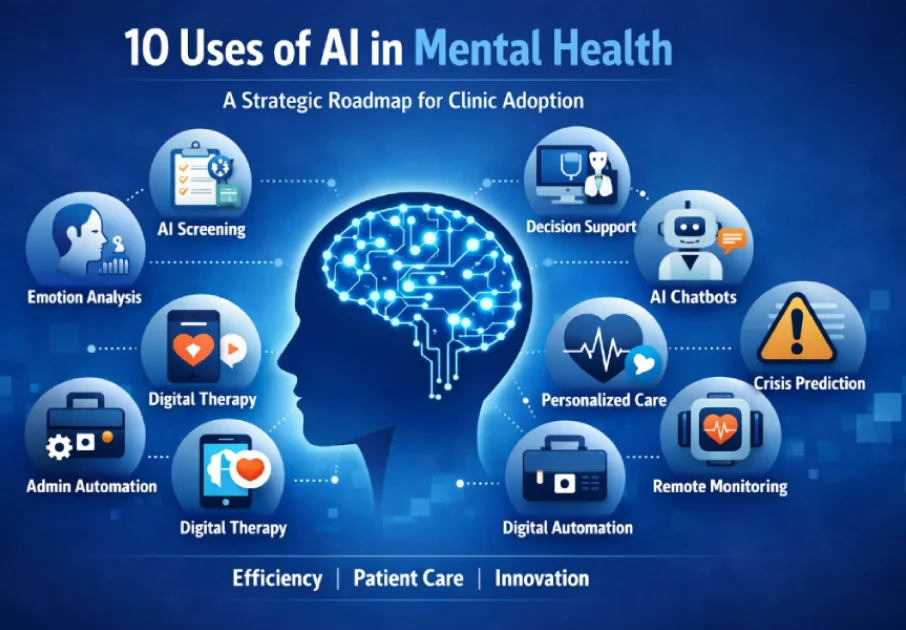
10 Uses of Artificial Intelligence in Mental Health: A Strategic Roadmap for Clinic Adoption
Mental health clinics today are under pressure in ways that were not common a decade ago. Patient demand is rising quickly. Staff members are stretched. Many clinicians spend long hours dealing with paperwork, scheduling issues, and administrative tasks rather than focusing on the people who truly need their help.
For practice managers and clinic directors, this situation can feel overwhelming. Running a clinic is not only about providing care. It is also about managing systems, resources, and staff wellbeing.
Artificial Intelligence is beginning to change how mental health services operate. AI systems can analyze large amounts of data, recognize patterns, and assist with decision making. When used properly, these tools support clinicians rather than replace them.
The goal is not to remove the human side of therapy. Mental health care will always depend on trust, empathy, and human understanding. AI simply helps clinics work smarter and reach more people who need support.
This article explores 10 Uses of Artificial Intelligence in Mental Health and offers a practical roadmap for clinic leaders who want to adopt these tools in a careful and thoughtful way.
1. AI-Assisted Mental Health Screening
Early screening is often the first step in effective treatment. Many patients arrive at a clinic after struggling for months or even years. They may not fully understand their symptoms. Some patients feel nervous speaking openly about what they are experiencing.
AI-based screening tools can help make this process easier.
For clinic managers, this improves the intake process and helps staff identify patients who may require immediate attention.
Practical benefits include:
- Faster patient assessments
- Better triage during intake
- More organized clinical consultations
When screening becomes more efficient, clinicians can spend more time listening and supporting their patients.
2. Clinical Decision Support Systems
Mental health care rarely follows a simple path. Two patients with similar symptoms may require completely different treatments.
Artificial Intelligence can support clinicians when they face these complex decisions. AI systems can review electronic health records, past treatment results, and clinical research data.
This does not mean AI replaces the clinician. It simply acts as a supportive guide.
For clinic directors, decision support systems help maintain consistency in treatment approaches across the organization.
Key advantages include:
- Better support for complex cases
- Faster access to relevant clinical insights
- More consistent treatment planning across providers
When clinicians have access to better information, patient outcomes often improve.
3. AI-Powered Mental Health Chatbots
One of the most visible uses of Artificial Intelligence in mental health is the rise of therapy chatbots.
These systems interact with patients through text conversations. Many are designed around Cognitive Behavioral Therapy techniques. They guide users through exercises that help them understand their thoughts and emotional reactions.
Of course, a chatbot cannot replace a therapist. Real care requires human connection. However, these tools can provide support between therapy sessions.
For clinics, this means patients stay engaged with their treatment plans even outside appointment hours.
Benefits for clinics include:
- Continuous patient engagement
- Support during difficult moments
- Reduced pressure on clinical staff
Sometimes even a small moment of support can make a patient feel less alone.
4. Predictive Analytics for Crisis Prevention
One of the most powerful roles of AI in mental health is predicting when someone may be approaching a crisis.
Machine learning systems can analyze patterns in patient records, therapy notes, and behavioral data. By studying these patterns, AI can detect warning signs that suggest worsening mental health.
For example, changes in mood reports, sleep patterns, or appointment behavior may indicate growing distress. AI systems can identify these signals earlier than traditional methods.
When a potential risk appears, the system can alert clinicians. This allows the clinic to reach out before the situation becomes severe.
For practice managers, this kind of early warning system can protect both patients and staff.
Benefits include:
- Earlier identification of high-risk cases
- Faster intervention by clinicians
- Improved patient safety
Mental health care should not always wait for a crisis to happen. AI helps clinics respond sooner.
5. Personalized Treatment Planning
Every patient brings a unique story into the therapy room. Their background, experiences, and coping mechanisms shape how they respond to treatment.
Artificial Intelligence can help clinics develop more personalized care plans.
AI systems analyze large collections of treatment data. They examine which therapies have worked for patients with similar characteristics. This may include demographic factors, symptom patterns, and treatment history.
Based on these insights, the system can suggest treatment options that are more likely to succeed.
For clinicians, this reduces the frustrating process of trial and error that sometimes occurs in therapy planning.
Benefits include:
- More personalized treatment strategies
- Faster adjustments to care plans
- Improved patient outcomes
Patients often feel more hopeful when treatment begins to show results sooner.
6. Digital Therapy Platforms
Digital therapy platforms are becoming common in modern mental health care. These platforms provide guided exercises that patients can complete between sessions.
AI technology helps personalize these programs.
Patients may log their mood, record emotional triggers, or complete short reflection exercises. The AI system reviews these responses and adjusts the program based on the patient's progress.
For clinics, digital therapy platforms offer an important advantage. Care does not stop when the session ends.
Benefits include:
- Increased patient engagement
- Better monitoring of therapy progress
- Additional support outside appointments
Sometimes the smallest daily habit can make a big difference in recovery.
7. Emotion and Behavior Analysis
AI technology is also being used to analyze emotional signals.
Some advanced systems can study speech patterns, facial expressions, and language use during conversations. These signals often reveal emotional states such as stress, sadness, or anxiety.
In telehealth consultations, clinicians sometimes miss subtle cues that would normally be visible in person. AI tools can highlight these emotional indicators.
For example, voice analysis may detect tension in speech patterns. Facial recognition systems may identify signs of fatigue or distress.
These insights can support clinicians during assessments.
Benefits for clinics include:
- Additional emotional insights
- Improved telehealth consultations
- Better monitoring of emotional changes
While this technology is still evolving, it shows promising results in behavioral health research.
8. Population Mental Health Insights
Artificial Intelligence can also help clinic leaders understand broader mental health trends.
AI systems can analyze large sets of clinic data. This includes patient demographics, treatment outcomes, and appointment patterns.
By reviewing this information, AI can highlight trends across the patient population.
Leadership teams can use this information to:
- Adjust staffing levels
- Introduce new therapy programs
- Identify gaps in mental health services
Understanding patient needs at a larger scale helps clinics deliver better care overall.
9. Administrative Automation
One of the most practical uses of AI in mental health clinics is administrative automation.
Many clinicians spend hours completing paperwork, writing clinical notes, and managing schedules. These tasks are necessary but time-consuming.
AI tools can automate many routine processes.
Some tools can also summarize therapy sessions and generate structured clinical notes. This reduces the time clinicians spend typing after each appointment.
For busy clinics, this improvement can feel like a small miracle.
Benefits include:
- Reduced administrative workload
- Faster documentation
- More time for patient care
When staff members spend less time on paperwork, they have more energy to focus on patients.
10. Remote Monitoring and Continuous Care
Mental health recovery does not happen only during therapy sessions. Patients continue to experience emotional ups and downs between appointments.
AI-based monitoring tools allow clinics to stay connected with patients during these periods.
Mobile apps can track mood changes, sleep patterns, or activity levels. Some systems also connect with wearable devices.
AI algorithms analyze these signals and look for important changes. If the system detects concerning patterns, clinicians may be notified.
This allows clinics to reach out to patients before a relapse becomes severe.
Benefits include:
- Continuous monitoring of patient wellbeing
- Early detection of warning signs
- Stronger patient engagement
For many patients, knowing that someone is paying attention to their progress can be very reassuring.
A Strategic Roadmap for Clinic Adoption
Adopting Artificial Intelligence requires careful planning. Clinics should not rush into new technology without clear goals.
Practice managers and directors can begin with a few simple steps.
Start by identifying areas where AI can reduce operational pressure. Administrative automation is often a good starting point.
Next, ensure that AI tools integrate smoothly with existing patient management systems. Fragmented systems create confusion rather than efficiency.
It is also essential to maintain strong clinical oversight. AI tools must always remain under the supervision of trained professionals.
Finally, clinics must protect patient data with strong privacy and security practices. Mental health records are highly sensitive.
With careful planning, AI in mental health can support clinics rather than complicate their work.
Looking Ahead
Artificial Intelligence will continue to shape the future of mental health services. Clinics that begin exploring these tools now will be better prepared for the changes ahead.
Technology alone cannot heal emotional pain. Real healing still depends on compassion, trust, and human connection.
However, AI can help clinics reach more patients, reduce administrative strain, and deliver care more efficiently.
Platforms such as Zoobook Systems are part of this transformation. By helping clinics manage scheduling, patient engagement, and operational workflows, these systems allow mental health professionals to focus on what truly matters.
And that, in the end, is helping people feel understood, supported, and hopeful again.
Even with all this technology, mental health care will always remain deeply human. AI simply helps clinics care for people a little better. Sometimes that small improvement can make a meaningful difference in someone's life.
Ready to Modernize Mental Health Clinic Operations?
See how Zoobook can help your team reduce admin burden, improve engagement, and keep patient care at the center.